A Guide to the Hard of Hearing
Agoncillo, Baleta, Berba, David, Inciong, Romero, Salac, Serranilla
description
Hearing Impaired is a disability that is close to deafness. People who are hearing impaired can still slightly hear. It can be permanent or not. Scientifically, it is considered deafness if a hearing loss is above 90 decibels. The Individuals with Disability Education Improvement Act of 2004 from Montana explains that it is hearing impairment if it adversely affects a student’s educational performance.
Subcategories of Hearing Impairment
Conductive Hearing Loss (CHL) - problems with the ear canal, ear drum, or middle ear
Sensorineural Hearing Loss (SNHL) - problems of the inner ear or auditory nerve
Mixed Hearing Loss - caused by a combination of conductive and sensorineural

causes and effects
causes
1. Heredity
One cause of hearing impairment is that it could be hereditary, meaning the impairment was caused by a gene in a mute/deaf parent. Another cause is premature birth which can have heavy effects on the baby’s development. While the most common cause is infection, there are different types of infection such as Otitis Media and the infection of the ear canal.
2. Acquired
Hearing loss can also be acquired through various ways such as infectious diseases, chronic ear infections, collection of fluid, injury to the head or ear, excessive noise, and aging. However, chronic otitis is commonly diagnosed to children.
effects
Depression- People who have hearing impairment may suffer depression as they suffer negative emotions. Such as awkwardness and feeling embarrassed.-A person who has hearing impairment has a high possibility of getting into an accident as they can not hear vehicles, etc. This makes them less alert.
Another effect is being unable to do as much work as a normal person can. Since most jobs require hearing, a person with this disability may not be able to work and earn well.People with hearing impairment may find it difficult to socialize and communicate with others.This causes, lack of concentration, feeling isolated, personality change, difficulty in differentiating sounds and many more.

intervention
There is no single treatment is applicable to all those who are affected with hearing impairment, but effective intervention requires effort and close monitoring. Working with professionals, getting a hearing aid, taking part in support groups and other resources are a few treatment options. Some of the good intervention and care plans include working with a/team of professionals for the child and family to learn how to communicate, getting a hearing aid, and joining support groups for the child. It is best to get early intervention services when the child is still a baby since it can help their development of speech, language, and social skills. Special Education are for children who are older and are experiencing developmental delays. Technology can be used in helping the child. The parents have the option of choosing: Hearing Aids, Cochlear or Brainstem Implants, Bone-anchored Hearing Aids, or other assistive devices.
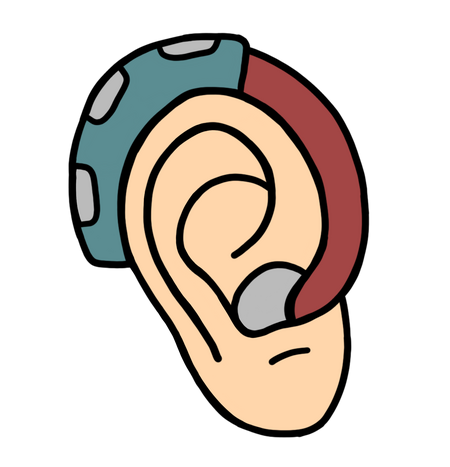
Hearing Aid - helps to make them hear louder and better
Cochlear and Auditory Brainstem Implants - sends sound signals directly to the hearing nerve
Bone-Anchored Hearing Aids - for children who can't wear ‘in the ear’ or ‘behind the ear’ hearing aids
Other Assistive Devices - FM System, Captioning, Telephone amplifiers, and Flashing and vibrating alarms.
To care for people with hearing impairment
1.Be patient as possible.
-If ever they weren’t able to hear what you said, be patient in repeating it, also try to rephrase it into words that are easier to understand.
-Speak slowly so that person would be able to catch up with what you are trying to say.
-Saying words clearly but do not raise your voice because it may also affect how the person will hear it.
2.Attend the check ups.
-If the person has an appointment with a doctor make sure to be able to attend it.
-There are also listening devices that doctors can recommend to patients with hearing impairment.
3.The person’s environment
-The person with hearing impairment can be affected by their environment because of the noises around them.

sources
What is a Hearing Impairment? Special Education Guide. (2016, May 25). Retrieved September 01, 2020, from https://www.specialeducationguide.com/disability-profiles/hearing-impairments/School Health. (n.d.). Retrieved September 01, 2020, from https://dphhs.mt.gov/schoolhealth/chronichealth/developmentaldisabilities/hearingimpairmentTypes, Causes and Treatments of Hearing Loss - the Basics. (2018, October 19). Retrieved September 01, 2020, from https://www.hearingloss.org/hearing-help/hearing-loss-basics/types-causes-and-treatment/Causes of Hearing Impairment - Health Hearty. (2008, August 13). Retrieved September 1, 2020, from Health Hearty website: https://healthhearty.com/causes-of-hearing-impairmentSide Effects of Hearing Loss – Hidden Risk Factors & Prevention. (n.d.). Retrieved September 1, 2020, from https://www.hearingsol.com/articles/side-effects-of-hearing-loss/#1-1-psychological-effectsDeafness and hearing loss. (n.d.). Retrieved September 02, 2020, from https://www.who.int/news-room/fact-sheets/detail/deafness-and-hearing-lossDeafness and hearing loss. (n.d.). Retrieved September 02, 2020, from https://www.who.int/news-room/fact-sheets/detail/deafness-and-hearing-lossUCSF Health. (2020, August 19). Communicating with People with Hearing Loss. Retrieved from https://www.ucsfhealth.org/education/communicating-with-people-with-hearing-lossClason, D. (2019, November 16). How to help and support someone with hearing loss. Retrieved from https://www.healthyhearing.com/report/51841-How-to-support-someone-with-hearing-loss